
How Auto Dealer CRM Software Helps Convert More Leads Into Sales
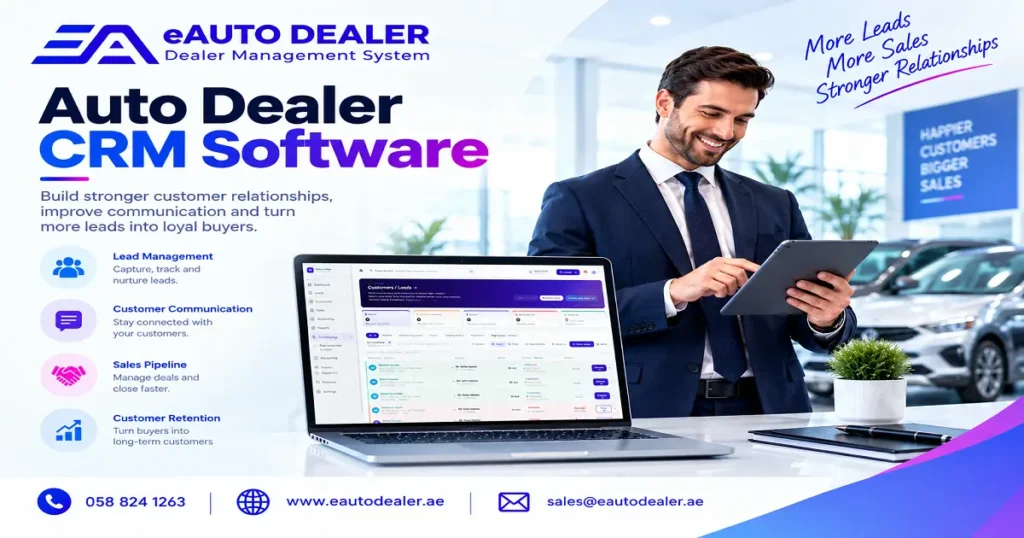
Converting potential buyers into paying customers is one of the biggest challenges for car dealerships. Many showrooms receive enquiries through websites, social media, phone calls, and online vehicle marketplaces, but not every enquiry results in a sale. Some customers do not receive timely responses, while others lose interest because of inconsistent follow-ups or irrelevant vehicle recommendations.
Auto Dealer CRM Software helps dealerships manage customer enquiries, organise sales activities, and maintain communication throughout the buying journey. With the right system and a well-managed sales process, dealerships can reduce missed opportunities, improve customer relationships, and increase their chances of closing more deals.
Why Do Car Dealerships Lose Potential Sales?
A dealership can attract plenty of enquiries and still struggle to achieve consistent sales. One common reason is poor lead management. When customer information is scattered across spreadsheets, phone records, and messaging applications, sales representatives may forget follow-ups or lose track of important conversations.
Another challenge is the lack of understanding of customer requirements. A buyer searching for a budget-friendly sedan may not respond positively to recommendations for expensive SUVs. Similarly, customers who request vehicle details or quotations may lose interest if they have to wait too long for an answer.
A structured CRM process helps dealerships address these problems by keeping customer information, communication history, and sales activities organised.
1. Manage All Customer Leads in One Place
Car dealerships often receive leads from several marketing channels. Managing each source separately makes it difficult to maintain accurate records and respond consistently.
CRM software brings enquiries into a central system where sales teams can review customer details, preferred vehicles, budgets, contact information, and enquiry sources. Each lead can be assigned to a responsible salesperson, helping ensure that enquiries receive attention.
For example, when a customer submits a website enquiry about a used Toyota, the sales team can record the vehicle of interest, contact the customer, and track the next action. This organised approach reduces the risk of overlooking genuine buying opportunities.
2. Respond to Customers Faster
Timely communication can influence whether a potential buyer continues discussing a vehicle with your dealership. Customers may contact multiple sellers, compare prices, and choose the business that provides useful information and a professional experience.
A CRM can notify sales representatives when new leads arrive and create tasks for contacting them. Automated acknowledgements and assignment rules may also help dealerships organise their initial responses.
However, automation should support personal communication rather than replace it. Sales representatives should understand the customer’s enquiry, answer questions accurately, and explain available options clearly.
3. Improve Follow-Ups Without Losing Track of Leads
Not every customer is ready to purchase a vehicle immediately. Some need additional time to compare models, discuss their budget, arrange financing, or schedule a showroom visit. Without a consistent follow-up process, these potential sales can easily be forgotten.
Auto dealer CRM software allows sales teams to schedule reminders, record call outcomes, and identify enquiries that require further attention. Representatives can follow up after sending quotations, arranging test drives, or answering questions about a vehicle.
This helps dealerships maintain communication throughout the buying process instead of relying on memory. Follow-ups should be relevant to each customer’s needs and respect their communication preferences.
4. Understand Customer Needs and Recommend Suitable Vehicles
Customers are more likely to engage with a dealership when its recommendations match their requirements. A CRM helps sales representatives record preferences such as vehicle type, price range, mileage, model year, and intended use.
When suitable inventory becomes available, the team can identify customers whose requirements match the vehicle. This makes communication more relevant and helps buyers discover appropriate options.
For example, a customer looking for a family SUV within a specific budget can receive details about vehicles that meet those criteria rather than unrelated promotional messages. Understanding customer preferences can make conversations more productive and support better purchasing decisions.
5. Track Sales Opportunities From Enquiry to Closing
A clear sales pipeline helps dealerships understand what happens after a customer makes an enquiry. Instead of treating every lead as a simple contact, the CRM records its progress through defined stages.
These stages may include new enquiry, contacted, vehicle selected, test drive scheduled, quotation sent, negotiation, booking, and completed sale. Sales managers can review the pipeline to identify delayed opportunities and determine which actions are needed next.
If several customers stop responding after receiving quotations, for example, managers can investigate pricing, response quality, or the clarity of the information provided. This helps dealerships improve their sales process using actual activity records.
6. Connect CRM With Vehicle Inventory
Sales representatives need accurate vehicle information to answer customer questions and recommend suitable alternatives. Switching between disconnected systems can slow down responses and increase the risk of sharing outdated information.
When CRM is integrated with inventory management, authorised staff can check vehicle availability, specifications, pricing, and stock details more easily. Customer enquiries can also be linked to specific vehicles, making it simpler to follow up when a car becomes available or an alternative matches the customer’s requirements.
This integration is particularly useful for used car dealerships, where stock levels and vehicle details can change frequently.
7. Measure Lead Conversion and Sales Performance
Generating enquiries is only one part of dealership marketing. Businesses also need to understand how many leads progress to appointments, quotations, bookings, and completed sales.
CRM reports can help managers monitor response times, follow-up activity, appointment attendance, conversion rates, and lead sources. These insights make it easier to identify where the sales process needs improvement.
For instance, if a marketing campaign produces many enquiries but very few qualified buyers, the dealership can review the campaign’s audience and messaging. If qualified leads rarely become showroom visits, the team can examine its response process and appointment scheduling.
Regular performance reviews help dealerships make more informed decisions about sales activities and marketing budgets.
Choosing the Right CRM for Your Dealership
Before investing in CRM software, dealerships should identify their main operational challenges and compare systems against their requirements. Important features include lead management, customer history, follow-up reminders, sales pipeline tracking, inventory integration, and reporting.
Ease of use is equally important because sales representatives need to update customer records while managing daily showroom activities. Businesses should also review data security, user permissions, training, customer support, integration costs, and the ability to support additional branches.
The best solution is not necessarily the one with the most features. It is the one that fits the dealership’s workflow and helps the team manage customer enquiries consistently.
How eAuto Dealer Supports Sales Management
The eAuto Dealer is designed for UAE car dealerships that need connected sales, CRM, and inventory workflows. It supports dealership processes involving customer enquiries, follow-up activities, quotations, vehicle stock, and sales reporting.
By connecting relevant information in one platform, dealerships can improve visibility into customer interactions and sales progress. Businesses can evaluate the system’s features against their current processes to determine whether it meets their operational needs.
Final Thoughts
Converting more enquiries into sales requires an organised process, timely communication, and a clear understanding of customer needs. Auto dealer CRM software helps dealerships manage leads, maintain consistent follow-ups, track sales opportunities, and connect customer enquiries with vehicle inventory. When sales teams use these tools effectively, they can reduce missed opportunities and provide a more organised buying experience. Choosing a CRM that fits your dealership’s workflow can help build stronger customer relationships and support sustainable sales growth.
Frequently Asked Questions
How does CRM software help car dealerships increase sales?
CRM software helps organise enquiries, improve follow-up consistency, maintain customer history, and identify sales opportunities that need attention. These capabilities can reduce missed leads and support more effective customer communication.
Can CRM software automatically convert leads into customers?
No. CRM software cannot guarantee a sale. It helps sales teams manage the process, but the outcome also depends on vehicle suitability, pricing, customer requirements, communication quality, and market conditions.
Is CRM useful for small used car dealerships?
Yes. Small dealerships can use CRM software to manage enquiries, track customer preferences, schedule follow-ups, and maintain organised sales records without depending entirely on spreadsheets.





Pingback: 15 Best AI Tools for Small Business Owners in 2026 (Free & Paid) - USA Business Daily
Pingback: Best AI Tools for Small Business Owners in 2026